
Melbourne’s prestige rental market is being shaped by a clear imbalance between strong demand for quality homes and a tightening supply of available properties. Recent legislative changes have also played a role in shifting market dynamics.
This contraction in supply is now measurable. In Victoria, more rental properties are being removed from the market than added, according to the Residential Tenancies Bond Authority. Since the March 2025 quarter, bond refunds have outpaced lodgements—a trend not seen in more than 20 years.

New Business Manager
Dylan Archer, New Business Manager at Kay & Burton, says this structural tightening is evident across the broader market, including the prestige segment, where demand for high-quality family homes remains consistent.
“Families are often working within established budgets, typically between $2000 and $5000 per week, and sometimes higher for the right property,” Mr Archer says. “They’re very clear on what they’re looking for—location, functionality and quality—and are prepared to act when those elements align.”
Sought-after features include pools, secure parking, home gyms, lifts and premium finishes, particularly in suburbs with strong school networks and established community infrastructure, including Hawthorn, Kew, Canterbury, Toorak, South Yarra, East Melbourne and Brighton.
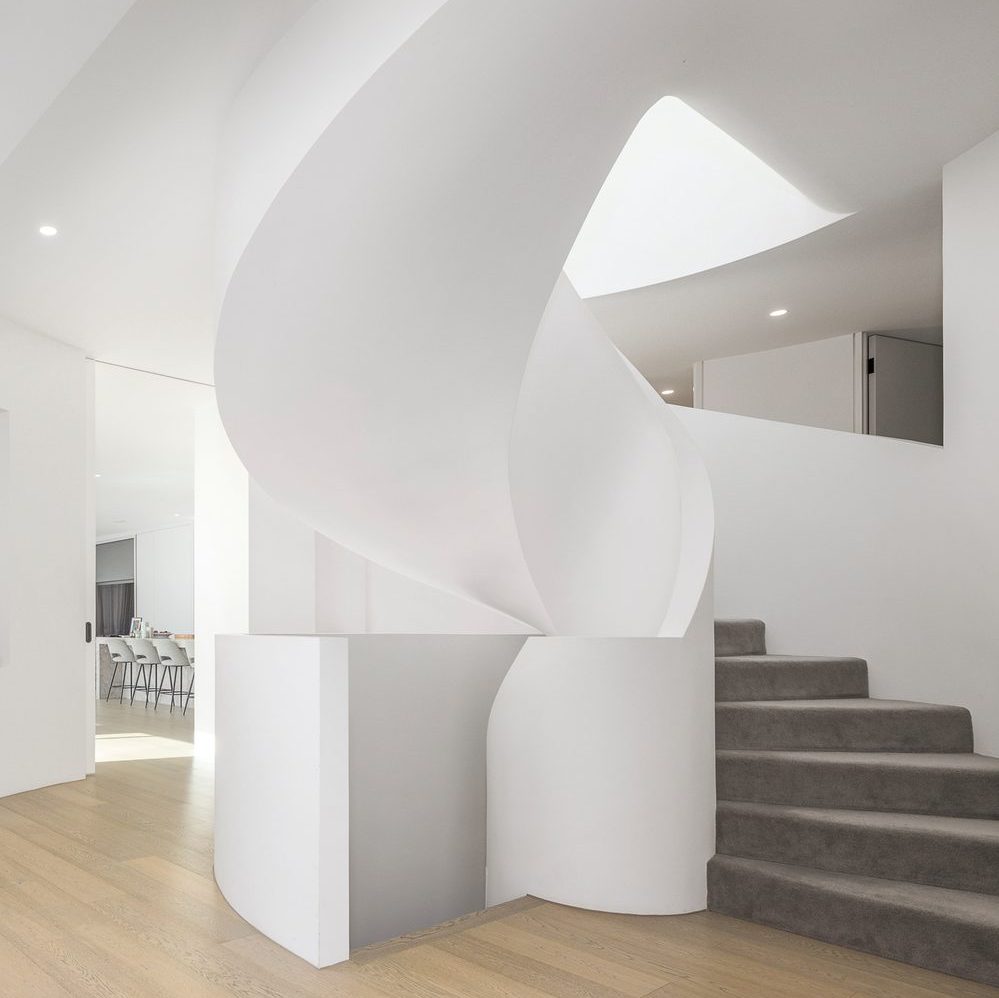
Recent leasing results across Boroondara highlight the depth and consistency of demand for high-quality family homes. In Hawthorn and Hawthorn East, properties at Illawarra Road and Clive Road achieved $4500 and $4250 per week respectively, both attracting strong enquiry, while a residence on Mont Albert Road, Canterbury, secured $4500 per week after just 10 days online.
This momentum is reflected more broadly across the market. A modern home at 23 Kurneh Place, South Yarra, leased off market for $4100 per week in February, while well-presented homes in Toorak and Brighton leased following a single inspection. In Brighton East, 38A Grant Street achieved $2995 per week, setting a new benchmark for townhouse leasing in the area.
Importantly, these outcomes are being driven not by rapid price escalation, but by alignment between high-quality homes and well-qualified renters in a supply-constrained environment.
“The best results come from a considered approach, where quality homes are introduced in a timely and targeted way.”
—Dylan Archer
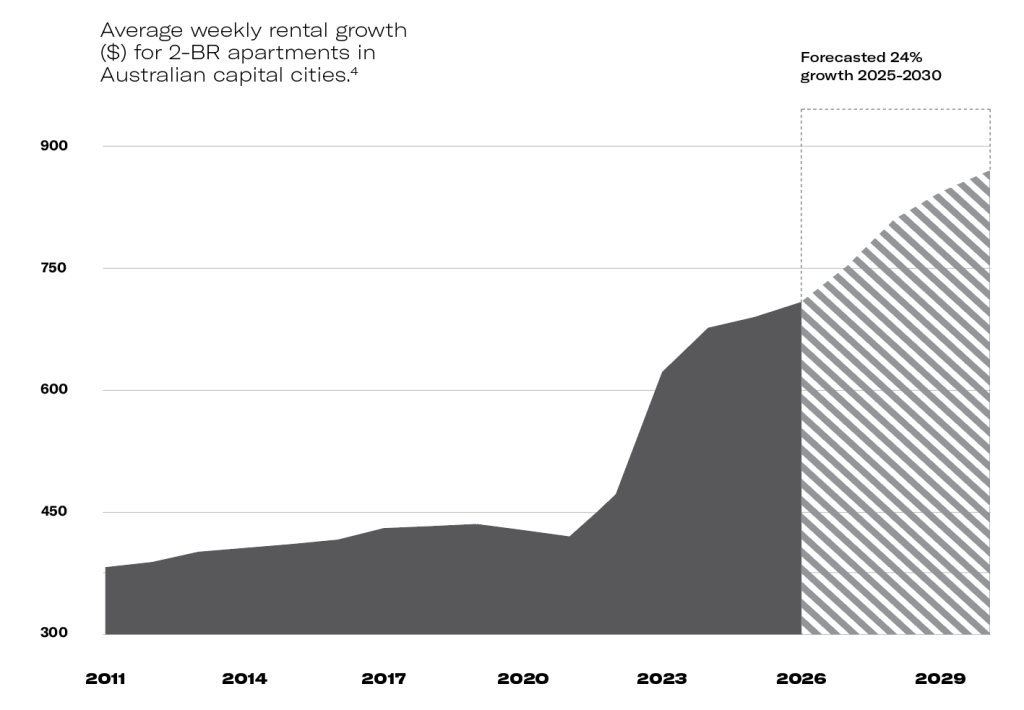
Looking ahead, the broader outlook points to continued pressure on supply. CBRE forecasts apartment rents across Australian capital cities to grow by 24 per cent between 2025 and 2030, supported by population growth and constrained development pipelines. In Melbourne, annual apartment completions are expected to remain well below projected demand, placing further pressure on vacancy rates, which are forecast to decline from approximately 2.1 per cent to 1.4 per cent city-wide over the next five years.
KPMG’s January 2026 Residential Property Market Outlook also anticipates steady rental growth of approximately 3.5 per cent annually across 2026–2027, remaining above long-run averages and reflecting a structural supply-demand imbalance expected to persist.
At the same time, affordability remains an important consideration. Cotality data shows renters are now allocating a record 33.4 per cent of income to rent—a rise from the 20-year average of 29.2 per cent—highlighting the ongoing pressure renters face across all price points. In a market defined by scarcity and discerning renters, outcomes are increasingly driven by strategy and connection.
“In this environment, it’s about matching the right renter with the right property,” Mr Archer says. “The best results come from a considered approach, where quality homes are introduced to qualified renters in a timely and targeted way.”
Images, 74 Champion Street, Brighton